 Activity 2: Energy Needed to Melt Ice
Introduction
Ice at 0 °C is added to a measured volume of warm water. Some of the ice melts. Oncethe mixture reaches 0 °C, the volume of liquid water is measured. The additional volume comes from melted ice. Using the amount of ice melted together with thetemperature and volume of warm water, the heat of fusion of the ice is determined.
Purpose
Students will determine the energy needed to melt one gram of ice by measuring the heat lost by a known quantity of warm water when ice is placed in the water and melted.
1. Wear protective goggles throughout the laboratory activity.
2. A burner will be used to warm the water to about 50 °C. Burns are possible. Avoid contact with heated objects. Use hot pads to move warm objects. Always place warm objects where someone else will not inadvertently touch them.
Procedure
Work in pairs to accomplish the following steps.
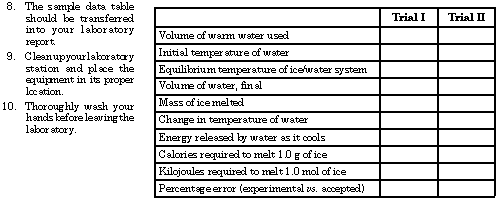
1. Warm water to about 50 °C. Add about 100 mL to a graduated cylinder. Record the volume.
2. Pour the water into a Styrofoam Ò cup. Measure and record the temperature of the warm water to the nearest 0.2 °C.
3. Obtain several ice cubes; pat dry with a towel and immerse in the cup.
4. Cover with a lid that has a small hole near the edge. Allow to equilibrate at 0 °C by shaking and adding ice until the system is at 0 °C and excess ice remains.
5. Pour liquid water into a beaker, holding back ice that reamins.
6. Measure the volume of the liquid by pouring water from the beaker into a large graduated cylinder. Record the volume.
7. Repeat Steps 1 to 6 as instructed by your teacher.
Data Analysis and Concept Development
Notice the number and colors of the spots on the two chromatograms. Draw circles around the spots that are common to the two candies. The spots must be the same color and must have traveled the same distance up the paper.
Implications and Applications
 |
TABLE OF CONTENTS | TOPIC OVERVIEW | CONCEPT/SKILLS DEVELOPMENT | LINKS/CONNECTIONS | EXTENSIONS |  |
|---|