 |
PROCEDURE
1. Perform the
reactions one at a time in 13 x 100mm test tubes.
Add 15 drops of each solution into the test tube.
SAFETY CAUTION: The hydrochloric acid, sulfuric acid,
potassium hydroxide, and sodium hydroxide solutions used
in this lab are extremely corrosive to skin and
clothing. Be careful when using these reagents
|
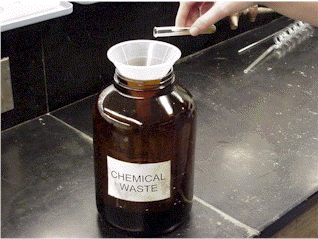 |
PROPER WASTE DISPOSAL: All
solutions used in this lab may be safely rinsed down the
sink with plenty of running water, except those
which contain the silver cation, Ag+.
These solutions must be poured into the special waste
container provided in the fume hood.
|
|
2. Mix the solutions together
by firmly holding the top of the test tube in one hand
and thumping the side of the tube near the bottom with
the other hand. |
|
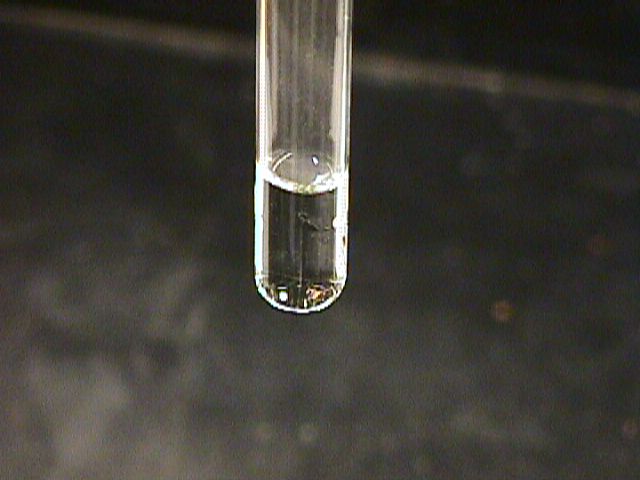
3. Observe whether or not a
reaction occurs. Things to look for are precipitate
formation (cloudiness or solid material dropping from the
solution, . . . |
|
gas evolution (the solution begins
to bubble), or . . . |
|
heat evolution (the test tube
becomes extremely HOT!!!)
(Note: It is difficult to depict HOT over the Internet!) |
 |
4. Record all of your
observations into the RESULTS box under "Evidence of
Reaction". Use the following terminology;
precipitate formed (include the color),
gas evolved, heat evolved, or NR for no reaction
observed. |